
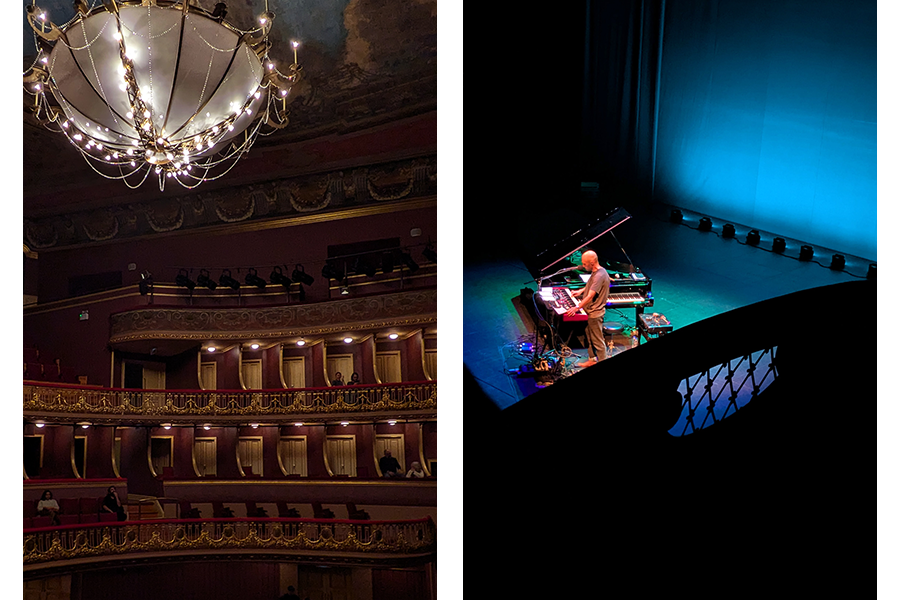
I first pondered this idea of layers at the beautiful Teatro São Luiz, listening to East Forest's layering mastery and silently sobbing at Ram Dass's profound words.
During the music set, I found myself struck by the contrast of crying in that moment, completely immersed in emotion, when just earlier in the day I had been laughing at myself and posting silly Instagram stories of my attempts to shuffle. There’s no shame in trying new things, looking a little silly and laughing at oneself or crying at a concert, but it made me realise just how many different versions of me can exist at once.
There is the sensitive creative me, and there is the tough sporty me. There is the funny, quirky me, the shy me, and the confident me, the quiet, reflective me and the loud, annoying me, judgmental me and open-hearted me… and they all seem to contradict each other while simultaneously embodying me as a whole.
I’ve long embraced the contradictions within me. I think that’s a beautiful thing about human beings; we can be completely in opposition to ourselves, and it still doesn’t mean we’re inauthentic or fake. It simply means we have layers.
"Layers. Onions have layers. Ogres have layers... You get it? We both have layers." - Shrek
Suddenly, all the questions came… How many layers do we have to peel to get to the core of oneself? What layer are you on as you read this right now? And what about the one when you speak to your friend, boss, or lover?
Perhaps Shrek knew something about Jungian mask theory and the Jungian Persona.
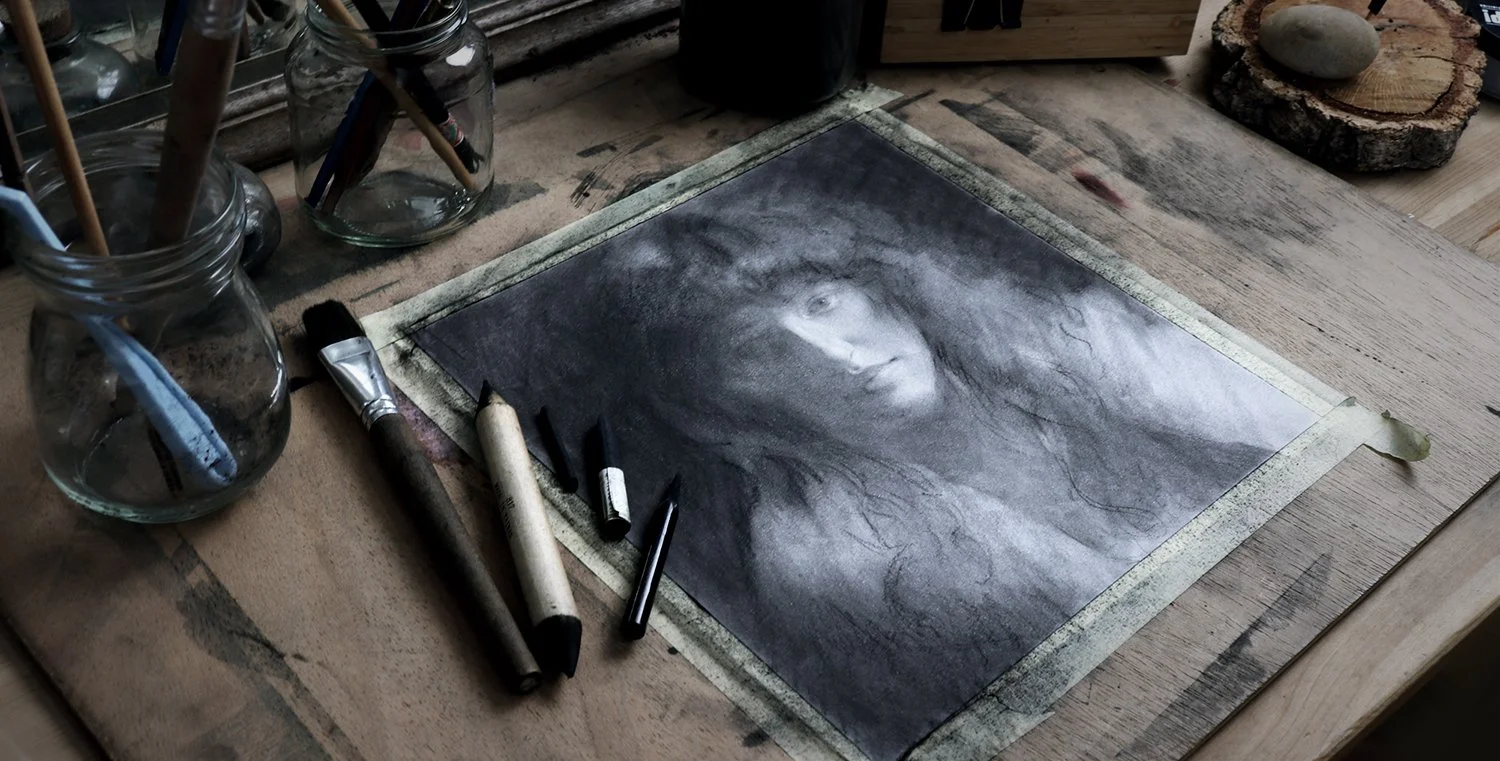
The artist me immediately saw the metaphor in layering charcoal.
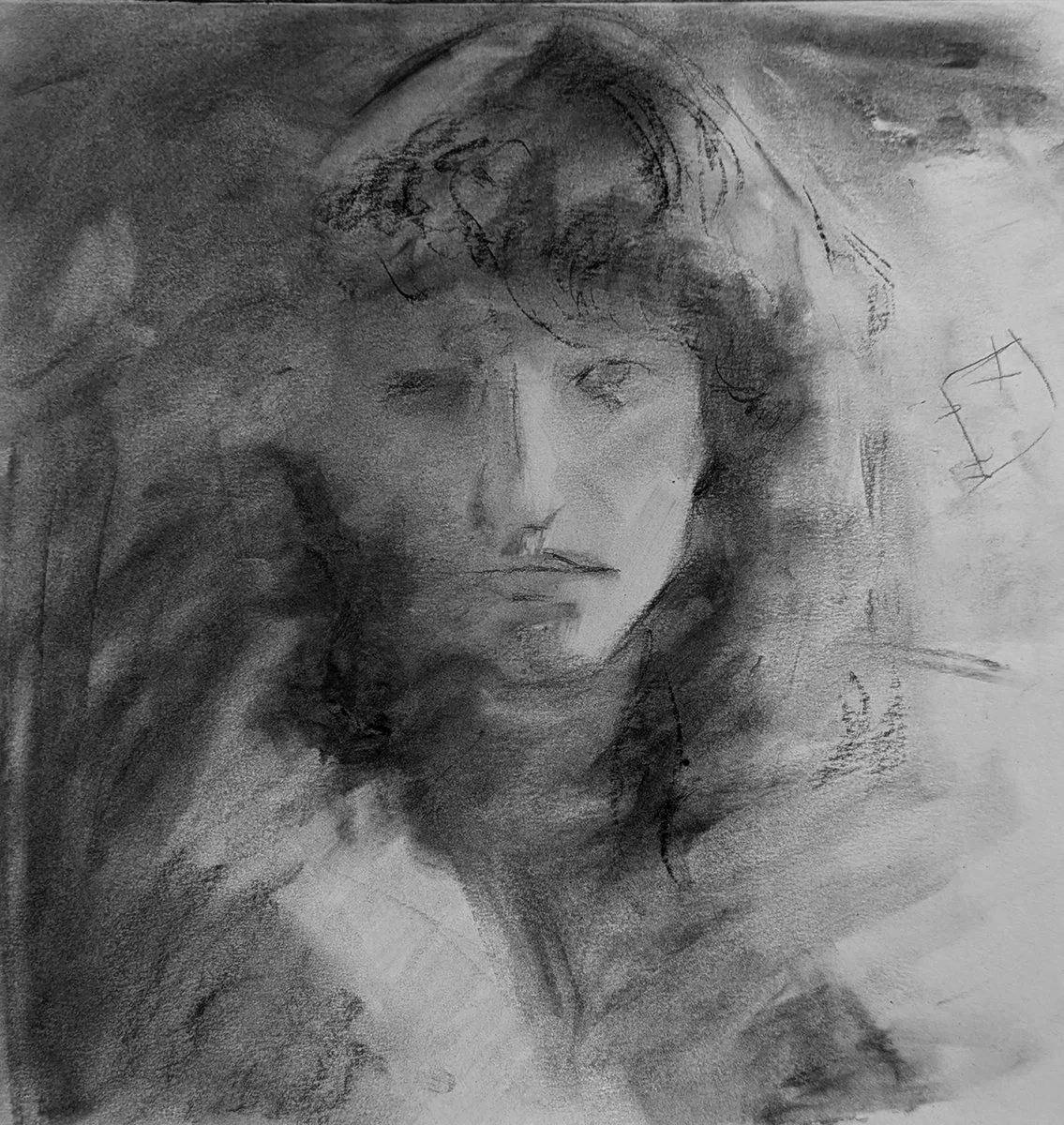
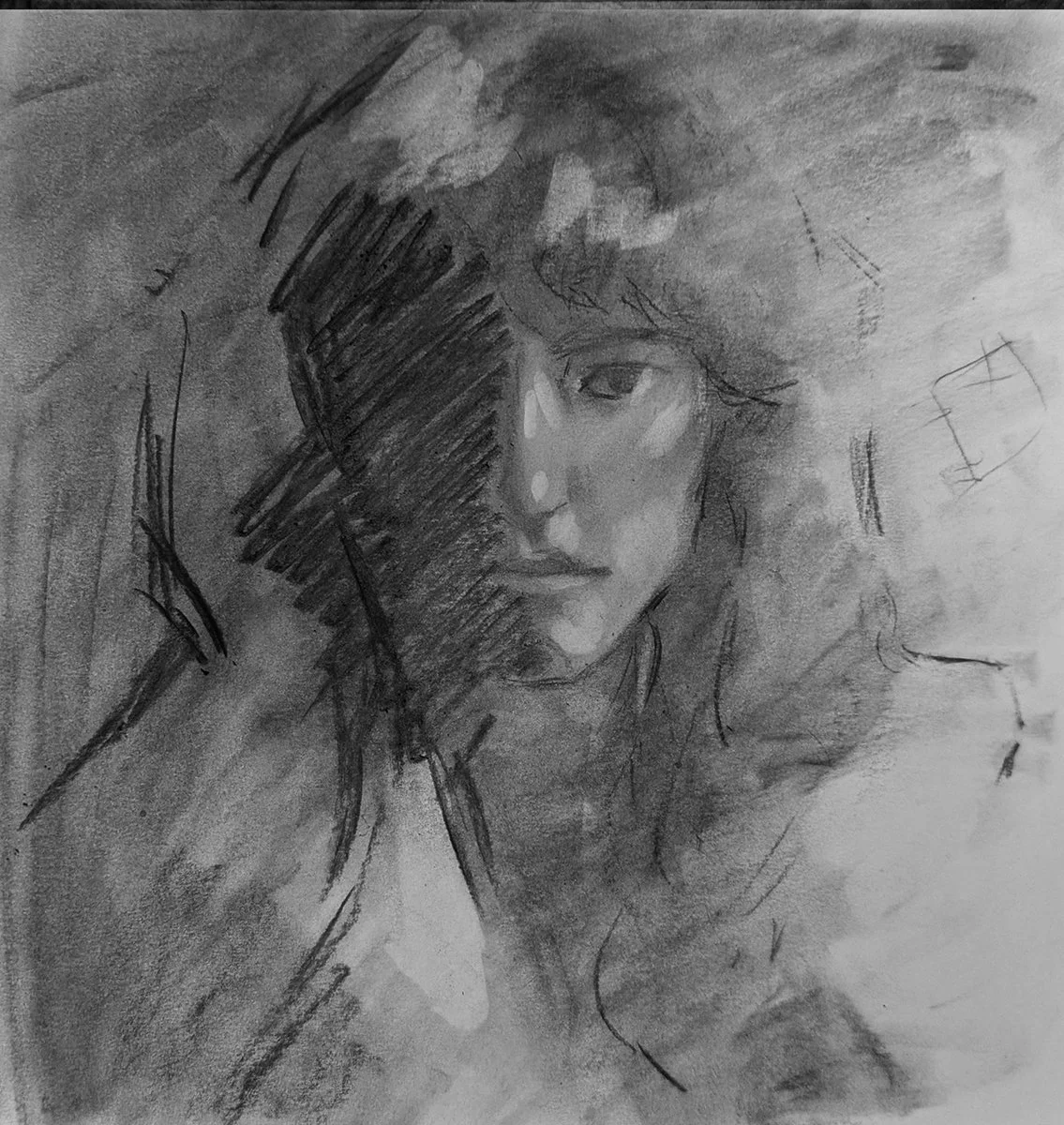
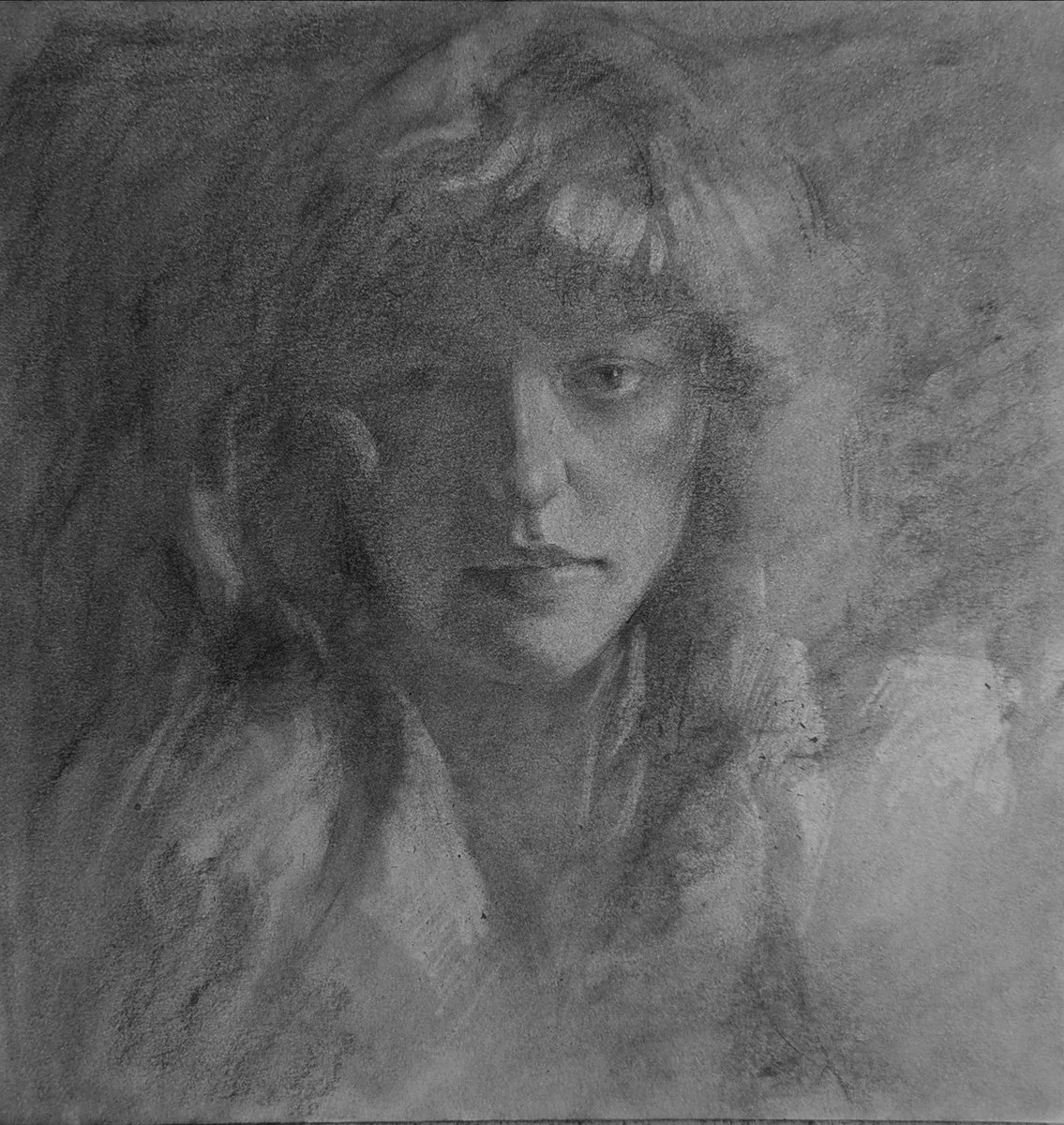
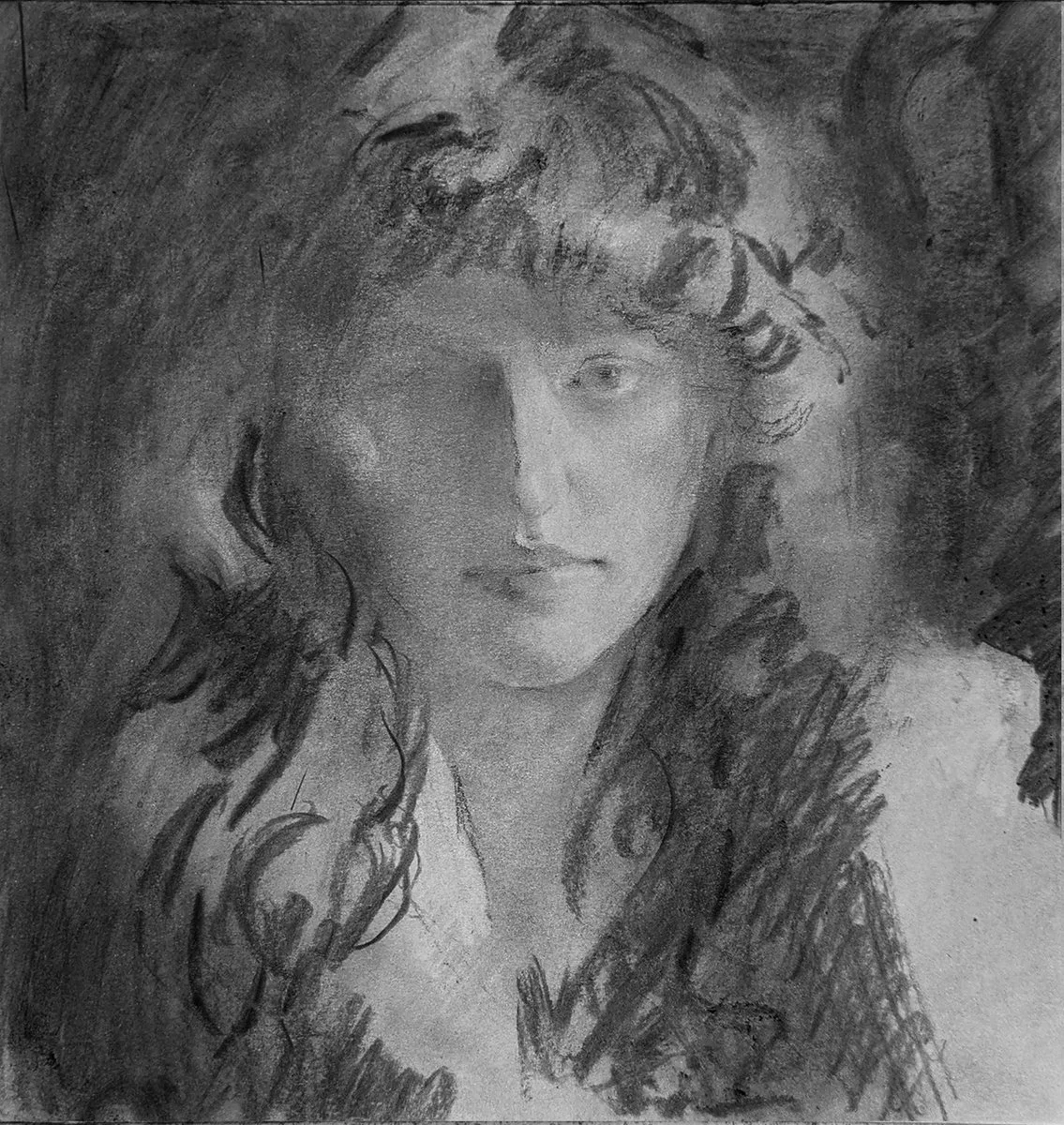
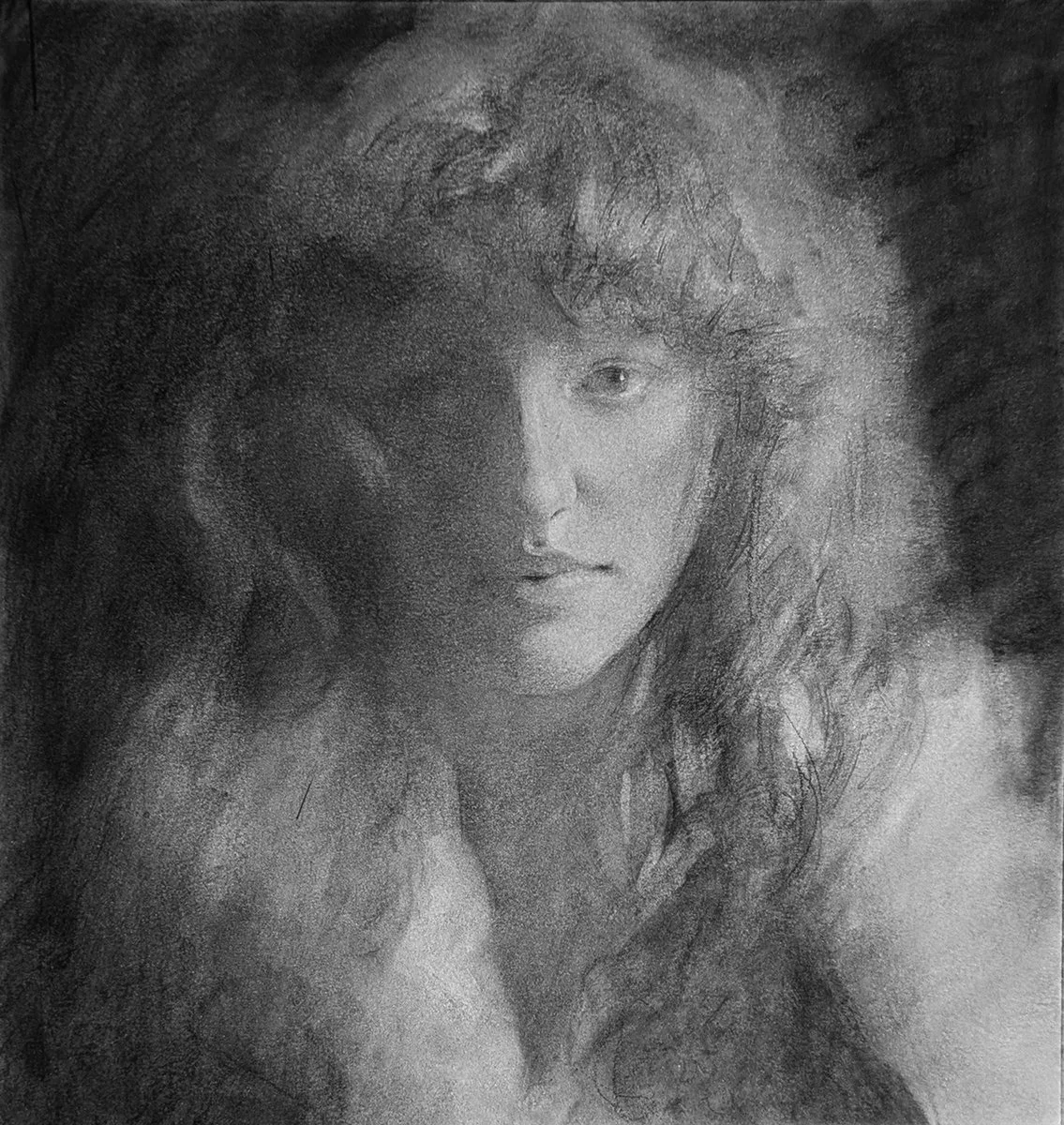
As a spiritual person, the idea is to find the soul by peeling the masks off and to stop identifying oneself with them, while as an artist I smear black dust on paper in a slow process of layering for the form to emerge. The portrait or the figure slowly takes shape, and with each layer, the physical form gets more and more refined.
The process of drawing in layers becomes a record of time the artist spent looking, thinking, understanding, and making decisions. It’s almost archaeological, looking at all the marks, careful decisions, but some of them mistakes impossible to erase, and some of them happy accidents the artist decided to keep.
A layered drawing holds the history of its own creation, and that’s what is beautiful about it. Nothing meaningful exists entirely on the surface.
I’d like to think that through drawing, I am not only describing just another mask - the outer physical mask of our body, which is so easy to fall into the trap of identifying with; rather, I am touching on something deeper, less tangible. The process for me is a process of searching. That, somehow, through the reverse method of putting on layer after layer, I could bring out someone’s presence, their character… I’d be able to preserve the core and find the soul.
And just like East Forest had mentioned at the beginning of the concert. We are all part of the creative process: the artist who did a drawing, you who are looking at it, and the presence that is greater than ourselves.
Whose soul is in that drawing, then? The artist’s, the subject’s, the viewer’s, or all the collective consciousness?
